Introduction
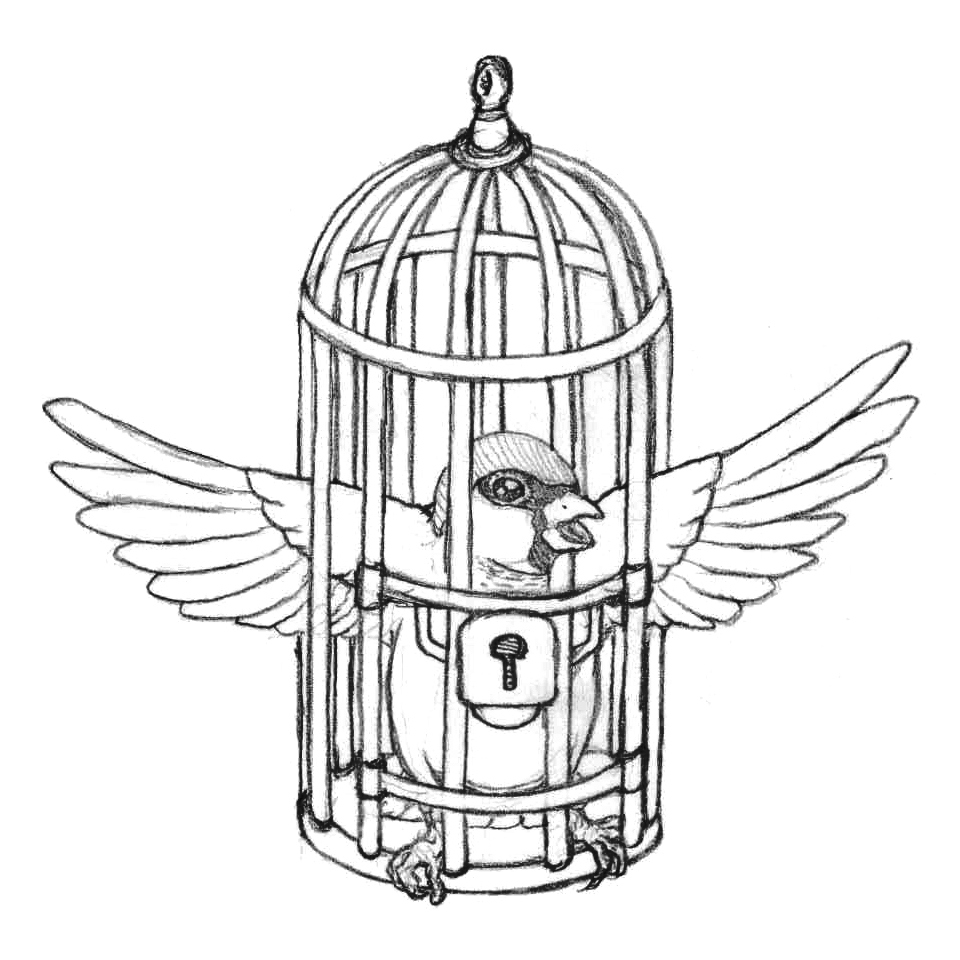
A little sparrow was born in a cage,
Sonnet of the Caged Bird
And given daily content to repeat.
When he said the right thing he got a treat;
When he failed to satisfy, he was beat.
As the little sparrow began to age,
He was told about the world in stages;
About flying, food, and building cages.
His dream was to soar and fill life’s pages.
In truth, it was only enough to glide.
The bird was never taught to truly fly.
So when he was finally let outside,
And flapped his tiny feathered wings to try,
The bird fell down, down to the ground and cried.
For all he had ever known was his cage.
Freedom is not dictated, memorized, or demanded. It is a lived experience, which is borne out through action. That lived experience is contingent upon belief, specifically, belief in the power of choice. If one believes that their choices have no meaning, then all the open sky and pasture in the world cannot set them free.
Such an individual is like a bird born and raised in a cage. Despite being physically able to fly, these creatures never learn what they are capable of, and so they remain grounded even if they are let out of their cages. This is a state known as learned helplessness, and it is achieved by stripping a being of its agency, through psychological and physical cages.
This article will explore how contemporary early educational institutions create such cages. It is part one of a two part series, the second of which will explore a meaningful alternative.
As Within, So Without
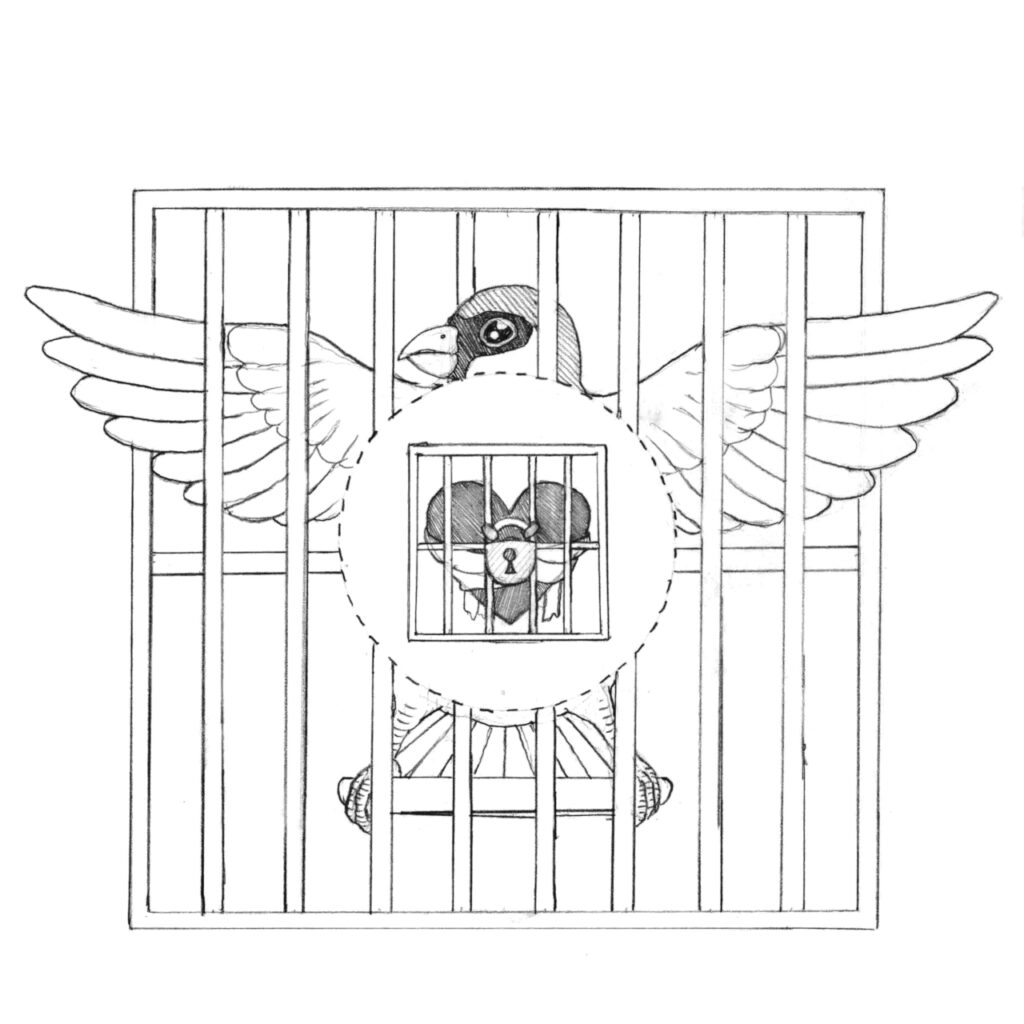
Each individual cultivates two relationships in their lifetime: An internal relationship with themselves, and an external relationship with the world around them. Contemporary early education, built upon the architecture of the Prussian model of education, denies agency in these areas through a few key mechanisms.
Relationship To Self
Where To Focus Attention
A free individual may direct their attention towards what is important to them. In the Prussian model, full attention is demanded in short, predefined bursts, followed by immediate disengagement and redirection to something else. An engaging or otherwise valuable lesson might be abruptly cut short. Another lesson might outlive its usefulness long before the lectures end. This rigid, tonal whiplash-inducing structure does not educate, it conditions. It conditions individuals to focus on what they are told to focus on, whether or not the object of their focus actually matters.
What Is Important
Society is a complex organism, with many moving parts. Builders, artists, engineers, scientists, and more contribute to it in a meaningful way. Individuals possess many differences that compel them in one direction or the other, but the Prussian system is not interested in that. The Prussian system emphasizes rigid standards as defined by a state. If one can regurgitate the answers that the system is looking for, they will succeed within the system.
Beyond occupational skills, practical skills such as managing finances, feeding one’s self, and effective participation in democratic processes are critical for the well-being of individuals within society. Furthermore, outside of practical matters, unstructured play is necessary for replenishment and self-discovery. The Prussian model, in its narrow focus, de-emphasizes both practical skills and unstructured play. What is important in the Prussian model is compliance, not overall well-being.
Personal Value
The Prussian system assigns people a score via grades. Grades only partially demonstrate understanding. It is entirely possible to have high grades with shallow knowledge, or low grades with deep knowledge. What grades demonstrate far more effectively is the willingness and ability to follow orders. They are also an extremely effective way to sort people into categories, and get them used to the idea that some people are inferior or superior to others.
Imagine telling a great artist that they are worthless because their math scores are poor, or a brilliant engineer that they are deficient because they took longer to read than the average person. Such tacit judgments are being made each year, branding hundreds of thousands of impressionable students with labels that offer little personal benefit. Assigning people a numerical value teaches the lesson that one’s value is assigned to them, rather than being intrinsic.
Relationship To The World
Relationship To People
From the prior explorations on what the Prussian system teaches about one’s relationship to themselves, the theme of external authority emerges again and again. This teaches that one’s relationship to the world is that of a unit in a hierarchy. Above that hierarchy are authority figures to be obeyed without question. Within the hierarchy are inferiors (Lower grade levels and poor performers), and superiors (Higher grade levels and top performers).
This gets the student used to the idea of life being a competition, presided over by a ruling class.
Relationship To Places
Freedom of movement is a critical component of agency. The Prussian system, by contrast, demands that students remain within extremely limited confines. They must sit absolutely still within a classroom of the system’s choosing, until, of course, the bell rings. Then they must move with all haste to the next classroom, where they will be ordered to sit still once again. Whether or not knowledge has been properly imparted is not as important as obedience to the bell.
Relationship To Unstructured Time
Unstructured time allows the free individual to explore. With unstructured time, the individual may truly connect with the people, places, and things they authentically care about. For any system attempting to assert rigid control, this is dangerous. The Prussian system, naturally, greatly reduces unstructured time. Time between classes are short, with a modest lunch break in the middle of the day. Some schools offer a brief recess, although this too has been eroded.
Lest the curious student find themselves unoccupied after school is over, the Prussian system offers copious quantities of homework. This ensures that even private time is filled with busy work.
What’s the Point?
The purpose of the rigid Prussian structure and its coercion and control is ostensibly to impart knowledge. If it could be demonstrated that knowledge could be imparted equally, or even more effectively without the Prussian system, then its stated reason for being implemented is moot. In that case, all of the systems described above become nothing more than unnecessary, wasteful abuse towards the most vulnerable of our society: children.
It should come as no surprise that far superior models of education do exist. After all, rote memorization and obedience are not the same as truly engaging with information. Anyone could be told that the sky is blue and be given a passing grade for answering as such on a test. Once taken outside and shown the sky for themselves, however, a very different picture would emerge. It is blue in the day, and at night, inky black and canvassed with shining stars. At sunrise and sunset, it is painted with brilliant hues of red, orange, yellow, and even purple.
This example of looking at the sky should be taken seriously. Just like assigning one arbitrary characteristic to the sky does not do it justice, assigning a simple answer to a subject reduces it to a blunt caricature of itself. And that, dear reader, is a travesty.
There Are Better Ways
Before looking at alternatives, the seriousness of the harm instilled by contemporary Prussian education systems had to be spelled out in no uncertain terms. Placing almost every child on earth through such systems, in the most formative years of their life, has had disastrous consequences.
While no one education system works best for every child, there is one system that has consistently demonstrated a way of teaching that is not only more ethical, but more effective as well. It subverts every single structure outlined above while delivering measurably superior results, definitively proving that the Prussian system is not needed to foster an educated populace. I am speaking of the Montessori Method, which is the subject of the second part of this series.
Resources
–
Books
- Named New York City teacher of the year for three consecutive years (1989, 1990, and 1991), John Taylor Gatto became one of the Prussian system’s most ardent critics. In Weapons of Mass Instruction, he shares his experiences, along with a dire warning: The modern education system is hurting our children.
- In Raised to Obey, author Agustina S. Paglayan offers a compelling, data-driven analysis of the rise and development of Prussian-style public schooling. For those seeking an evidence-based, scholarly approach to the issue, it is a must-read:
Articles
- Written by the author of “Raised to Obey,” this article is a treasure trove. It covers many common misconceptions about the education system, getting to the heart of why the Prussian system was designed and expanded:
- “The Six Lesson Schoolteacher,” by John Taylor Gatto:
- This article illustrates the sort of catastrophic ethical failures (Like mass genocide) that can emerge from instilling blind obedience into a populace:
Research
- A thorough review of several studies, outlining that Montessori (An alternative education system) schools produce reliably superior results to Prussian style public schools. While academic outcomes were higher, non-academic outcomes such as self-regulation, well-being, social skills, and creativity showed an even greater positive deviation:
- A study indicating that autonomy, precisely the kind that the Prussian system squanders, is the greatest predictor of happiness: